

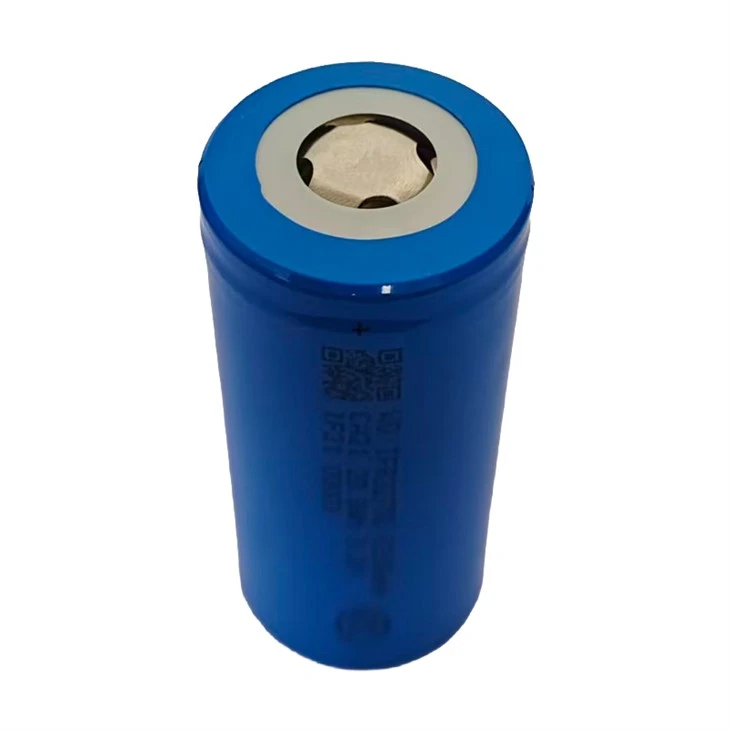
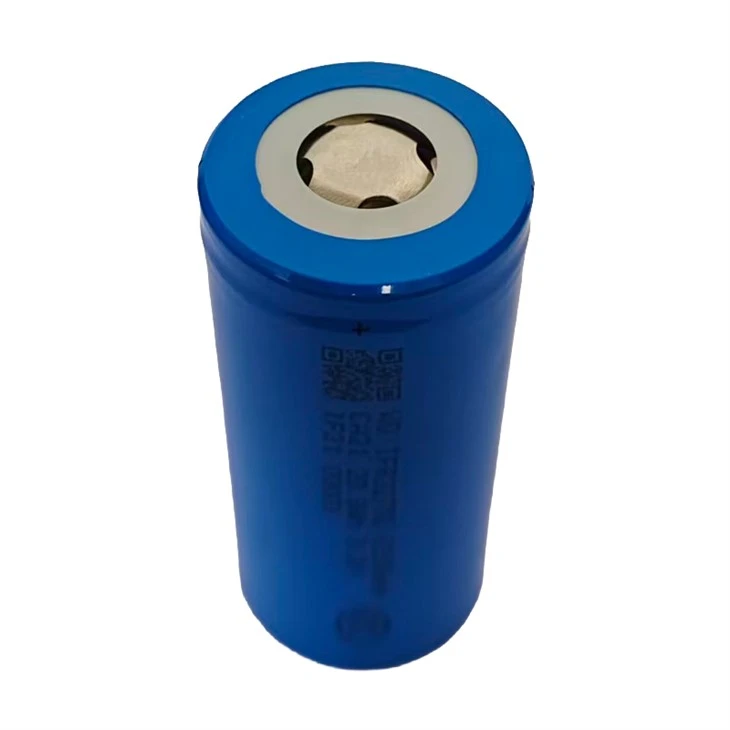
If you’ve ever put together a custom energy storage system, e-scooter pack, or off-grid power setup, you’ve probably considered parallelizing lithium iron phosphate (LiFePO₄) cylindrical batteries to boost capacity without changing voltage. As a battery supplier that’s worked with everything from Lithium Cylindrical Cells for small consumer applications to large-scale Energy Storage Cylindrical Batteries for commercial use, I’ve seen first-hand that parallelization done right can double your runtime—while a single misstep can lead to overheating, shortened cell life, or even safety risks. Today, I’m breaking down exactly how to parallel LiFePO₄ cylindrical batteries correctly, based on years of testing and real-world deployments with our Rechargeable Cylindrical Lithium Battery products, including our popular Cylindrical 18650 Lithium Ion Cells.
First, let’s get clear on why parallelization works, and why it’s not as simple as grabbing two identical cells and wiring them together. Parallel connections add cell capacity while keeping the total voltage the same—so two 3.2V, 2Ah LiFePO₄ cells in parallel become a 3.2V, 4Ah pack. That’s ideal for applications like portable power banks, RV battery systems, or small solar storage where you need more runtime without replacing your existing voltage regulators. But here’s the catch: LiFePO₄ cells, unlike other lithium chemistries, have a more consistent voltage profile, but their internal resistance, capacity, and self-discharge can vary even from the same manufacturer’s production batch. Ignore those variations, and you’ll create a “current imbalance” that becomes a problem over time.
For example, if you pair a 2Ah cell with a 1.9Ah cell in parallel, the smaller cell will hit full charge (or drain to empty) before the larger one. When you charge, the full cell will stop accepting current, forcing the remaining charge to flow through the smaller cell, which can cause overcharging, heat buildup, and long-term capacity loss. When discharging, the smaller cell will reach its minimum voltage first, pulling the larger cell down with it, leading to deep discharge damage that can reduce a cell’s cycle life by 50% or more. We’ve seen this with customers who skip proper matching: a pack that should last 2,000+ cycles died after just 500 because of mismatched parallel cells.
So, step one is rigorous cell matching. What does that actually mean for LiFePO₄ cylindrical batteries? Matching should happen on three key metrics: capacity, internal resistance (IR), and open-circuit voltage (OCV) at rest. For parallel packs, we recommend that all cells have a capacity difference of less than 2%, internal resistance within 5% of each other, and OCV within 10mV at rest. Why such tight tolerances? Even a 10mV voltage difference between two parallel cells can create a small current flow—usually 50 to 100mA—that’s tiny for a single cell, but multiplied across 10 or 20 cells in a pack, that current imbalance adds up to heat and uneven wear over time.
At our facility, we test every cell before shipping to customers using our automated cell matching system, which sorts cells into bins based on those three metrics. If you’re putting together a small pack at home or for a prototype, you can do a basic match yourself: start by selecting cells from the same production batch (check the batch code on the cell’s casing—cells from the same batch have the most consistent characteristics). Then, use a battery tester to measure capacity, IR, and OCV. To test capacity, charge each cell to full (3.65V for LiFePO₄, which is slightly higher than the nominal 3.2V) at a 0.5C rate, then discharge at the same rate to 2.5V, recording how much charge they hold. For IR, use a tester that measures internal resistance under load (not just at rest) to get an accurate reading—high IR cells will drag down pack efficiency, especially during high-current draws like for e-bikes. Finally, leave all cells resting for 24 hours, then measure their OCV; any cell with an OCV more than 10mV off the average of the group gets set aside.
Once you’ve got matched cells, the next critical step is wiring them correctly to avoid additional resistance. A lot of first-timers use thin wire to connect parallel cells, thinking it’s no big deal—but wire resistance adds another imbalance factor. Imagine two cells: one connected with 16AWG wire and one with 12AWG wire. The thinner wire has higher resistance, so more current will flow through the thicker wire’s cell, creating the same current imbalance we talked about earlier. For parallel packs, we use at least 12AWG wire for packs under 10Ah, and 10AWG or thicker for packs over 10Ah, with the same gauge wire used for every parallel connection.
Even more important: connect all parallel cells in a “parallel busbar” or “star configuration” rather than a series string. A string configuration (cell 1 positive to cell 2 negative, cell 2 positive to cell 3 negative, and so on) creates a voltage drop from one end of the pack to the other, so the first cell in the string gets more current than the last. A star configuration connects every cell’s positive terminal to a central positive bus, and every negative terminal to a central negative bus, which equalizes voltage across all cells and eliminates uneven current distribution. For 18650 cylindrical cells, which have small, threaded terminals, we recommend using nickel-plated copper tabs that are spot-welded to each cell’s top and bottom; spot welding is more reliable than soldering for cylindrical cells, because soldering can damage the cell’s casing or internal structure (excess heat from a soldering iron can cause the cell’s separator to break down, leading to short circuits).
Another mistake we see is skipping a balance management system (BMS) for parallel LiFePO₄ packs. A lot of people think BMS is only for series packs, but that’s not true—parallel packs also need protection, especially for larger packs with multiple cells. A parallel BMS doesn’t manage voltage across series cells; it monitors the total pack voltage, current, and temperature, and balances the individual cell voltages during charge and discharge to correct for small imbalances that naturally develop over time. For small parallel packs (2 or 3 cells) for low-current applications like a small phone charger, a passive BMS works fine; it drains small amounts of current from cells that are overcharged to bring them in line. For larger packs (8+ cells) used in high-current applications like off-grid solar or e-scooters, an active BMS is better—it transfers excess charge from fully charged cells to undercharged ones, which is more efficient and reduces heat buildup compared to passive balancing.
Wait, what about cell number? How many cells can you safely parallel? The short answer is: as many as you can properly match and wire, but realistically, we don’t recommend parallelizing more than 10 LiFePO₄ cylindrical cells without a robust BMS. Beyond that, even small mismatches between cells can snowball into large imbalances. We recently tested a pack with 12 matched cells vs. a pack with 12 cells that were just “close enough” (within 5% capacity and 10% IR)—the matched pack had 92% capacity retention after 1,000 cycles, while the mismatched pack had only 78% retention. That’s a huge difference in longevity, and it’s directly due to the number of cells parallelized without proper matching.
Also, don’t mix cell formats in the same parallel pack. Even all LiFePO₄ cells, if they’re different sizes (like 18650 and 21700 cylindrical cells) or from different manufacturers, will have different voltage profiles, capacity, and IR. Mixing formats is a fast way to create current imbalance and safety risks. Stick to the same cell type, same format, same batch for every parallel connection.
Let’s talk about charging and discharging practices, because even a perfectly wired, matched pack can fail if you charge or discharge it incorrectly. For LiFePO₄ parallel packs, always use a charger rated for LiFePO₄ chemistry, and follow the manufacturer’s charging profile: constant current (CC) charging until cells reach 3.65V, then constant voltage (CV) charging until current drops to 0.05C (about 5% of the pack’s total capacity). Never overcharge a parallel pack—even a small overcharge can lead to thermal runaway, which is a major safety concern for lithium batteries. When discharging, don’t draw more than the pack’s C rate; for most consumer LiFePO₄ cylindrical cells, the maximum continuous discharge rate is 1C (meaning a 10Ah pack can safely discharge 10A). If you need a higher current, you can parallel multiple packs in series? No, wait—parallel packs for higher capacity, series for higher voltage. For higher current, you’d use cells with a higher C rating, or parallel more cells, but make sure your wiring and BMS can handle the current.
We also recommend regular maintenance for parallel packs. Every 50 cycles, check each cell’s voltage (after a 24-hour rest period) and internal resistance. If a cell’s voltage is more than 50mV off the average of the pack, or its IR has increased by more than 20% from its original reading, replace that cell immediately. Don’t leave a bad cell in the pack—it will drag down the others and cause more damage.
Now, let’s address a common question: is parallelizing LiFePO₄ better than buying a single higher-capacity cell? For most applications, yes—single high-capacity cylindrical cells are more expensive, harder to source, and less flexible. Parallel cells let you build a custom pack with exactly the capacity you need, and they’re often easier to replace individually if a cell fails. But that only works if you parallel them correctly. If you cut corners on matching, wiring, or BMS, a parallel pack will be less reliable and shorter-lived than a single high-capacity cell.
At the end of the day, the goal of parallel LiFePO₄ cylindrical batteries is to create a pack that’s as consistent, safe, and long-lasting as a factory-built battery pack. We’ve built thousands of packs for customers using our 18650 cells and other Lithium Ion Cylindrical Battery products, and the packs that last the longest are the ones where customers took the time to match cells, wire them correctly, and use a proper BMS. If you’re working on a project and need LiFePO₄ cylindrical batteries for your parallel setup, we offer pre-matched cells and BMS systems to make the process easier. For custom battery packs, energy storage systems, or any application requiring reliable lithium cylindrical cells, get in touch with our team to discuss your needs and find the right solution.
References:
- US Department of Energy. (2022). Lithium-Ion Battery Parallel Connection Best Practices for Energy Storage Systems. DOE Office of Energy Efficiency & Renewable Energy.
- Zhang, Y., et al. (2021). Current Imbalance Effects on Cycle Life of Parallelized LiFePO4 Cylindrical Cells. Journal of Power Sources, 502, 123087.
- International Electrotechnical Commission (IEC). (2020). IEC 62660-3: Secondary Lithium-Ion Cells for Traction – Part 3: Safety Requirements for Parallel Operation.
- Battery University. (2023). Parallel Battery Connections: Balancing and Safety Considerations. Cadex Electronics Inc.